Resources

Learning is also a process, not an end goal. When we are learning anything, let alone an emerging therapeutic modality like DBR, perhaps we can learn from our four-legged teachers about how to be with ourselves and others as we do.
For DBR Therapists and DBR Clients, Lessons From Yoga About The Being With: Part 1
I feel the bracing in his body as if it were a wave travelling down through the nylon leash, hitting my hand like a tsunami. His breathing shortens, he becomes hyper-focused, and there is an unsettling stillness about him that is not calm, but rather fixated and alert, rigid and vigilant. Right now, as I see it, his brain is on a subcortical pathway. I have a brief moment to intervene, right before bark and snarl comes. My job is to intervene now before this becomes a fear-based learning.

Whether it’s in our horsemanship, as Ray Hunt described, or as I also see it, relative to our clinical and personal work (which really is the same), the key to avoiding trouble lies in tracking the “what happened before what happened ” in our clients and also ourselves. Without this awareness, we miss the moment right in front of us and end up chasing after the proverbial horse that's already left the barn.
It is easy to forget that there is an underlying need for a sense of peace, both internally and externally, that we, and our clients, seek.
Living Centered and Exploring Equine Assisted EMDR

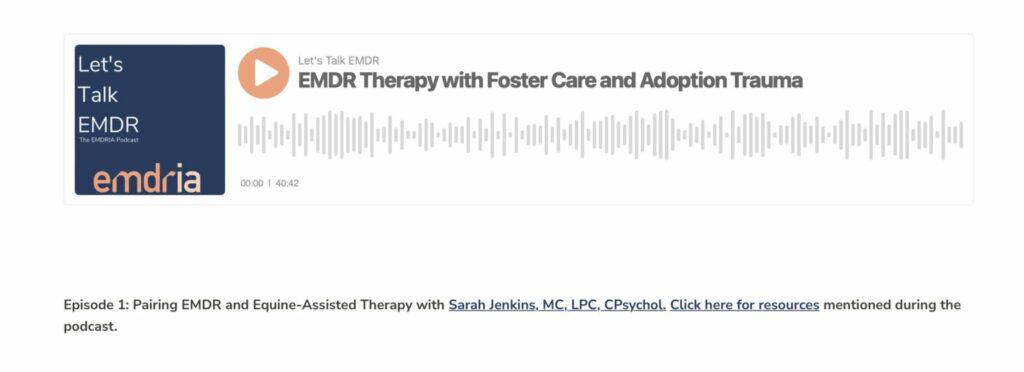
This week join Mickenzie and Lindsey for a fascinating conversation with Certified EMDR Therapist Sarah Jenkins. Sarah is brilliant and a pioneer in the modality of Equine Assisted EMDR. Together the three explore how trauma impacts our bodies and how this profound therapeutic method can benefit individuals who have experienced adversity experience presence and healing.

Let’s Talk EMDR, The EMDRIA Podcast – Season 2 Episode 1

How can EMDR therapists teach presence and centeredness to clients? Sarah Jenkins, MC, LPC, CPsychol, suggests using a four-legged friend. Equine therapy is not a new concept. It’s been used for decades to help people with physical disabilities. So, how can these beautiful creatures help EMDR therapy clients? Can equine-assisted therapy with EMDR help clients with complex PTSD? What about EMDR therapists who don’t have access to horses but want to integrate equine-assisted therapy into their practice? Learn more about this approach to EMDR therapy.

Check out the shop!

EquiLateral™ merchandise is available! Visit the online store for EquiLateral™ branded shirts and more!