It just felt “grabby.” That’s the only way that I can describe it, the feeling as if there was a pull, a want, a desire, and a seemingly important “need,” and yet, it really wasn’t a true need, it was a distraction. Funny enough that something, that which I wanted, was something on the “outside” that seemed important at the time, perhaps even necessary, but upon reflection, really doesn’t mean anything about me, at all. What I was “chasing” or pining for, was actually causing me to keep engaged in the very chase itself. Like a dog chasing its tail, it felt cyclical, until I got present with the experience of my “grabbing” and “striving,” and that the feel of this experience, was the very opposite of what in Yogic terms, is described as Aparagraha. It was the very opposite of having acceptance, even though things were not as I wanted them to be. I don’t have to “like” it, but I do have to realize that my attachment to things being different, won’t help. In fact, my nonacceptance is usually what makes things feel worse.
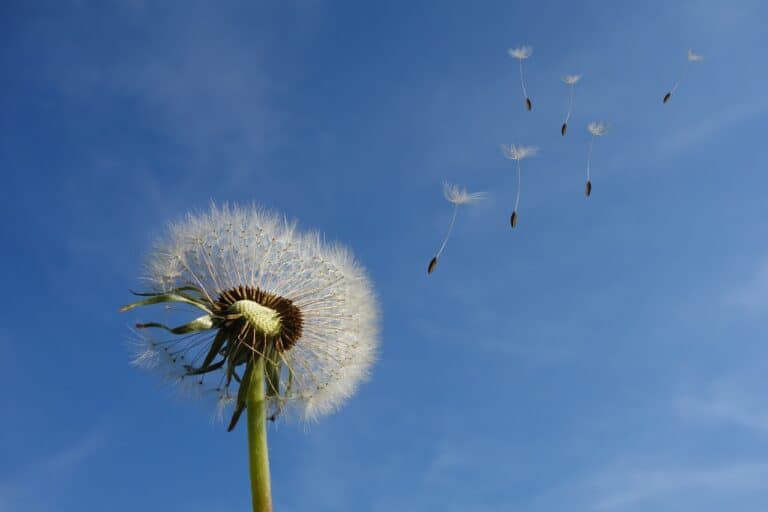
Whether it be chasing something that we “want,” our attachments, or not letting go, when we are hoarding ideas, objects, time, energy, sensory experiences, etc., when we are not allowing, we are instead, “holding on.” These resistances can make things worse. But, when we practice Aparigraha, the opposite of what I think of as being “grabby,” we instead recognize that change is inevitable, that nothing is permanent, and that our attachments to objects, ideas, experiences, “how things should be,” are mental constructs that tell us we are lacking. Aparagraha teaches us that if we try to hold on, and close our hands, grasping, that we aren’t allowing for what is, as it is, as well as for what might unfold. Let’s face it, our hands and hearts have to be open for receiving in the first place.
In practical terms, what does this mean in our day-to-day life? As I have written about before, it’s not unusual for common “themes” to come to the surface with consultees, as well as with students in trainings. It’s as if there is some archetypal force at play, where folks are staffing cases, or showing their clinical work in videos, or just discussing their learning and professional goals. No matter what the modality or invention being discussed is, there can be an undertow of a clinician’s resistance to what is.
The language of it comes across as a description that the client, or even the therapist “should,” be doing something, or experiencing something. “I should be better at this,” or, “we should be this place in the processing,” or “it should be easier,” or “I wish that the client would,” or “I should have this ____ fill in the blank “thing” by now.” You name it, it is all the language, and “feel” of getting grabby, attempting to turn away from the reality of how things are, and clamoring instead for some illusion of control. For, in the attempt to grab ahold of something “out there,” on the outside of us, we are instead, missing the feel of that process of the wanting, itself. That’s where the personal work begins. We have to get in front of the wanting, instead of focusing on the “what” that is wanted.
If we ignore our internal experience, we are also ignoring that we are getting “grabby” in the first place. We miss getting in front of when we might be hyper-focused on what we want “out there,” instead of what’s going on “in here,” on the inside. We must have the discernment to pick up on that internal pull, for as the American Zen teacher Cheri Huber, described in 1990 “That which you are seeking is causing you to seek.” We can get lost in the process of wanting that object, goal, feeling, sensation, title, object, or experience, instead of bringing an awareness to the very process of the wanting, itself, as way to catch ourselves, get present again, and be in a place of acceptance of what is. That doesn’t mean that we don’t take action, but instead, we also have an awareness of what we can’t control, as we engage in our best efforts.
So, as a practice, perhaps experiment, if there is something, some experience, some object, some attachment you have, big or small, what if you were, instead, to just allow the feeling of the wanting itself to be in your awareness, to work with that? Trust me, I know, it can feel vulnerable, and it might even seem daunting, but at the same time, a rich experience. Being with the wanting itself, and the feel of that, as opposed to a hyperfocus on that which you are wanting, and have attachment to, can be a powerful doorway into self-exploration, if you are willing.